Pure Love of the Game
February 22, 2026
I can’t stop thinking about this picture of Alysa Liu. It has permanently altered my brain chemistry.
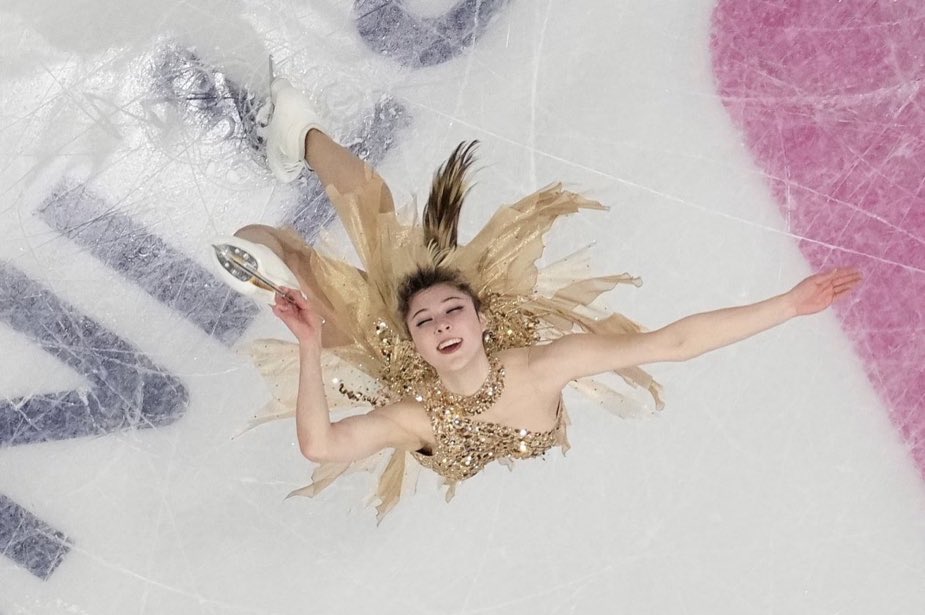
This picture was taken two days ago. It was the final spin in Alysa Liu’s gold-medal-winning routine at the 2026 Winter Olympics in Milan. I don’t usually watch the Winter Olympics, but I happened to watch her performance. Being a Bay Area native, she had become a topic of conversation in my circles in San Francisco.
As I watched her routine, I was mesmerized. It was my first time watching professional figure skating. To me, it looked like flying. I’ve always believed that even in domains that are uninteresting to you, watching the greatest in the world do them is a worthwhile experience. One would enjoy watching Dave Chappelle tell jokes, Stephen Curry make a three-pointer, or John Mayer play guitar, even without any interest in comedy, basketball, or music. Sure enough, watching the greatest skater in the world effortlessly glide on the ice was exhilarating.
Alysa Liu’s routine was particularly moving. At first, I couldn’t tell why that was. Eventually, it dawned on me. If you were to look very closely at her face through her routine, it appeared as though for a few moments, no one on Earth was having as much fun as she was.
I found it difficult to reconcile how she could radiate such carefree joy in perhaps the highest-pressure ten minutes of her life. Yesterday, I decided to read her Wikipedia page. Alysa began skating when she was five, when her father, who had been a protester at Tiananmen Square and later had been exiled to the United States, took her to a rink in her hometown of Oakland, California. By thirteen, she had won the US Championship and become the youngest skater in history to perform a clean triple Axel in competition. Four years later, she became the youngest member of Team USA at the 2022 Winter Olympics in Beijing. Two months later, before her seventeenth birthday, she announced that she was retiring from skating.
In an interview with NBC Sports, she attributed the decision to feeling satisfied with her career, and alluded to often not enjoying skating at times.
“I was so into skating that I really didn’t do much else. Skating takes up your whole life, almost. I don’t know if other people kind of feel the same when they look back at certain parts of their life, but for me, it’s definitely a blur, because it kind of meshes together, you know – going to the rink, going home, competing. There were many, many times when I didn’t enjoy it.”
Retiring from a career that was headed in a sharply upward trajectory seemed like a perplexing move to many. She was only the second American Olympic skater to not bid for a second Olympics.
A couple of years later, a ski trip with family reminded her of the rush she used to feel while skating. This led her to return to the rink for the first time in nearly two years. Through 2024–25, she competed internationally at various points. The following summer, it was announced that she would be competing with Team USA in the 2026 Winter Olympics in Milan.
Many spectators of the sport consider the second leg of Alysa Liu’s career to be quite distinct from her first. For 12 years, she pushed herself under tremendous pressure from herself, her father, and from Olympic spectators. In the second leg, Alysa Liu was skating for nothing but a pure love of the game. In February, millions of spectators like me got to watch an athlete at the highest levels of competition deliver an astounding performance while looking strikingly unburdened, joyful, and earnestly at peace.
I perceive myself to be an ambitious and competitive person, albeit far from the leagues of an Olympian. From education among particularly bright cohorts to then competing in some of the most contested and lucrative markets in Silicon Valley, I have always found fulfillment in ambitious pursuits. However, my friends and family will point out that my ostensibly successful career has been underpinned by debilitating stress, anger, pain, and a deep-set feeling of inadequacy.
While intellectually I recognized that it didn’t have to be this way, I had never internalized it. Deep down, I believed in a masochistic version of victory, that deeply felt hardship was a necessary condition for outsized achievement.
That picture of Alysa Liu showed the deepest parts of my unconscious mind an alternative path. One where there was light at the end of the proverbial tunnel of years of exacting pilgrimage. That one could let go, unchain, perform simply for a love of the game, and come out at the other end both joyful and victorious.